Rethinking how chronic lung disease is treated
HI-164 is an oral immunotherapy designed to address a key driver of chronic lung disease: persistent bacterial colonisation. By targeting the underlying biology of recurrent respiratory infection, HI-164 represents a different approach to preventing exacerbations and their long-term impact.



A cycle of infection, exacerbations and lung damage
In chronic lung disease, damaged airways and impaired immune defences make it harder for the lungs to clear respiratory bacteria. Bacteria can persist in the airways, increasing the risk of repeated infections and exacerbations. Each exacerbation can cause further inflammation and airway damage, contributing to declining lung function and increasing vulnerability to future events.
Damaged airway defences
Bacterial colonisation
Repeated exacerbations
Hospitalisation
Progressive lung damage
HI-164 Mechanism of Action
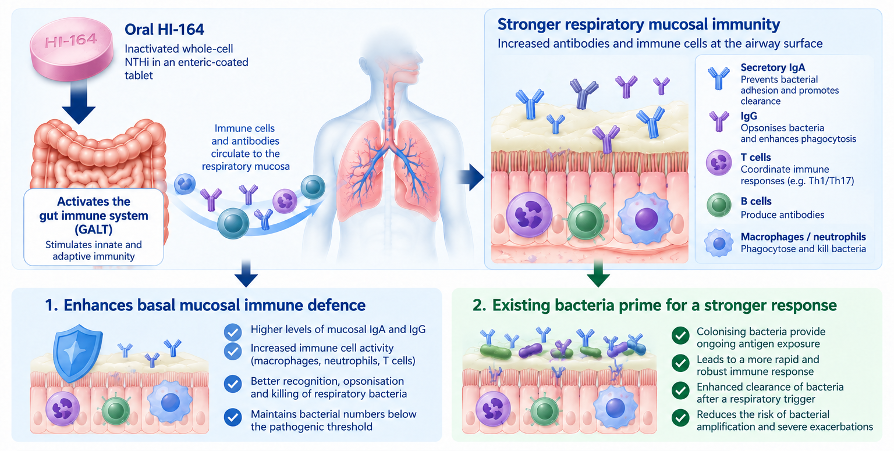
Rather than focusing on the downstream effects of chronic lung disease, HI-164 targets persistent bacterial colonisation by restoring mucosal immunity. Taken orally, HI-164 activates immune responses in the gut that travel to the respiratory tract, strengthening the lungs’ ability to recognise and clear respiratory bacteria.
What drives the response to HI-164
Clinical studies have identified key factors associated with response to HI-164, helping to explain its biological activity and define the patients most likely to benefit.
Bacterial colonisation is a prerequisite for benefit from HI-164, consistent with its role as a bacterial preventative.
Consistent benefit was observed in patients aged <65 years, associated with improved IgA and T-cell responses.
Stronger efficacy was observed in women, particularly those aged >65 years, associated with enhanced mucosal immunity from oestrogen.
Together, these findings help define the biological and patient characteristics associated with response to HI-164 and inform the patient populations most likely to benefit.
Studied in more than 500 patients with COPD
HI-164 has been evaluated in two Phase 2 clinical studies involving more than 500 patients with COPD. Both studies were double-blind, randomised and placebo-controlled, with HI-164 administered alongside standard of care. The studies investigated whether HI-164 could reduce bacterial exacerbations and associated symptoms in patients with existing lung disease.

Phase 2
Mild–severe airways disease
n=140
7-month duration
75 patients aged <65 years
Phase 2
Moderate–severe COPD
n=320
12-month duration
Sub-group: 169 patients excl. males >65 years
Strong reduction in hospital admissions
Across the Phase 2 studies, Standard of Care + HI-164 resulted in a 50–73% reduction in hospital admissions compared with Standard of Care alone.
Sources: WHO, CDC, NIH/NHLBI, American Lung Association, Global Burden of Disease Study, JAMA
Improved quality of life during peak COPD season
In Study HI-05, patients aged under 65 receiving HI-164 showed significant improvements in quality of life at 12 and 24 weeks, during winter when COPD symptoms are most prevalent.
SGRQol scores improved at 12 and 24 weeks — during winter when COPD symptoms are most prevalent.Source: Clancy et al. 2016
Helping people live healthier, fuller lives
HI-164 is being developed with the goal of changing the long-term impact of chronic respiratory disease, moving beyond symptom management to address the underlying drivers of disease progression.

Reducing bacterial infection may lead to fewer and less severe exacerbations.

Reducing severe exacerbations may mean fewer hospital admissions and emergency visits.

Fewer exacerbations may reduce the impact of chronic lung disease on patients’ quality of life.

Reducing repeated exacerbations may mean less airway damage, inflammation and decline in lung function.
Our research is focused on the biological pathways that drive chronic respiratory disease, with the goal of developing therapies that modify disease progression rather than managing symptoms alone.